

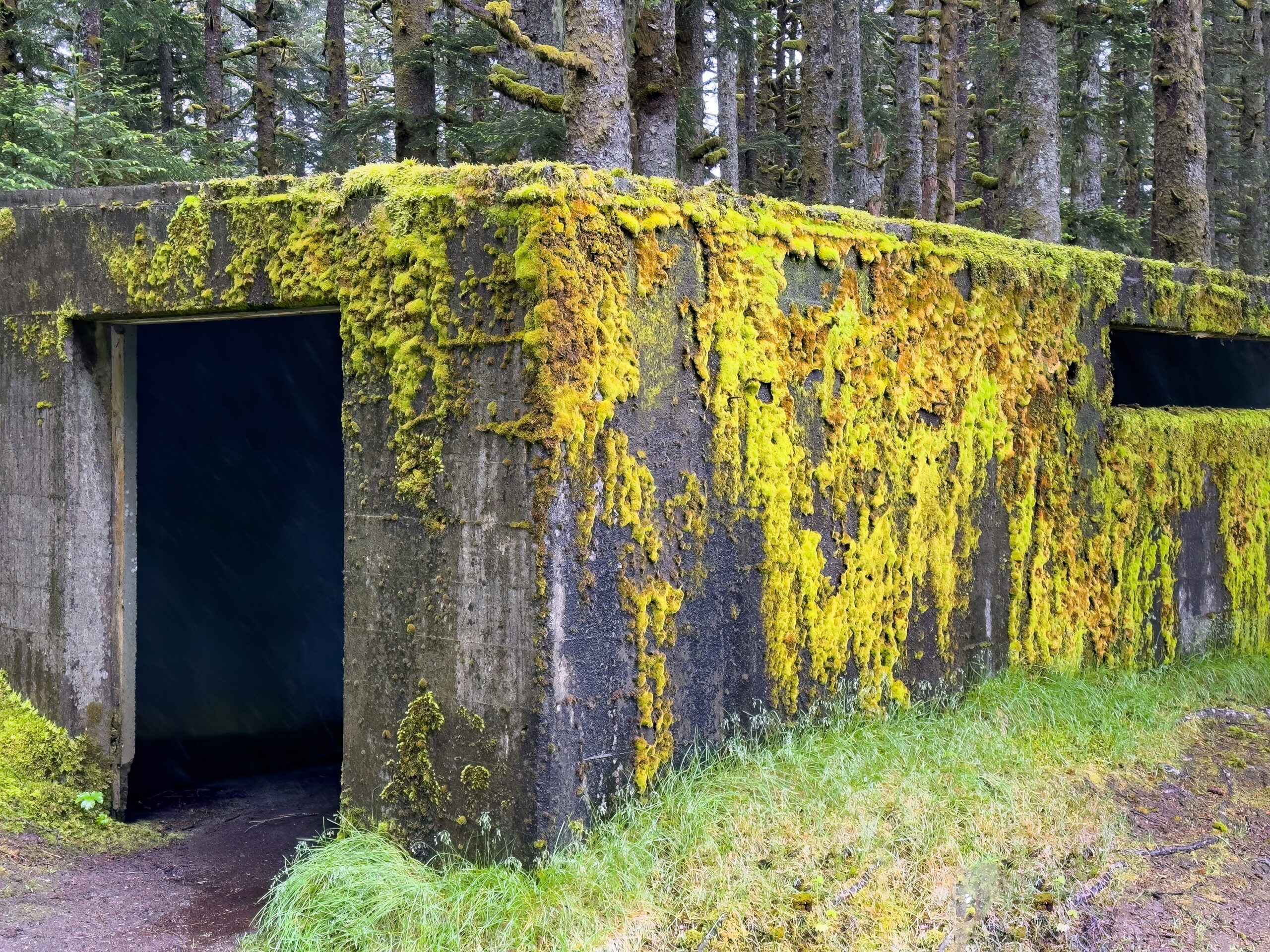
During World War II, Kodiak Island played a critical role in protecting Alaska’s coastline. The U.S. military constructed a network of coastal defense sites—including artillery batteries, bunkers, and observation stations—to guard against potential threats following the Aleutian Islands Campaign. One of the most well-known installations was Fort Greely.
After the war, many of these military lands were declared surplus and eventually transferred out of federal ownership. Through the Alaska Native Claims Settlement Act (ANCSA), portions of these lands were conveyed to Alaska Native corporations, including Natives of Kodiak.
Today, some of the lands that were once used for coastal defense, including Fort Greely, are part of NOK’s land base. These areas may still carry historical features, federal easements, or environmental considerations tied to their prior use. At the same time, they represent important long-term assets for the corporation.
For NOK, this history reflects more than military presence; it highlights the transition of land back into Native ownership and the responsibility to manage it thoughtfully. Whether through conservation, cultural stewardship, or future development opportunities, these lands continue to play a role in the corporation’s future.
Understanding this history helps connect past and present—showing how lands once used for national defense are now part of the foundation for shareholder benefit and community stewardship.
An informative eBook on this important time in Kodiak’s history was prepared for the U.S. Army Corps of Engineers by Montgomery Watson under the direction of Jacobs Engineering Group of Anchorage. It is available for download at the following website: https://www.poa.usace.army.mil/Portals/34/docs/engineering/TheKodiakCoastalDefenseSystem.pdf